
- Licensed and insuredCertificates of insurance on request
- Salt Lake area yardQuote, delivery, setup, servicing and pickup
- Every county in UtahWasatch Front to St. George and the Basin
- Heated and cooledBuilt for January snow and July heat
How renting works
- 1Call or send the planner with the town, dates and headcount.
- 2A quote comes back, usually the same working day.
- 3We deliver, level and set up; call the same line for service.
- 4Scheduled servicing on site, then pickup when the job ends.
Every rental starts and ends in the same yard
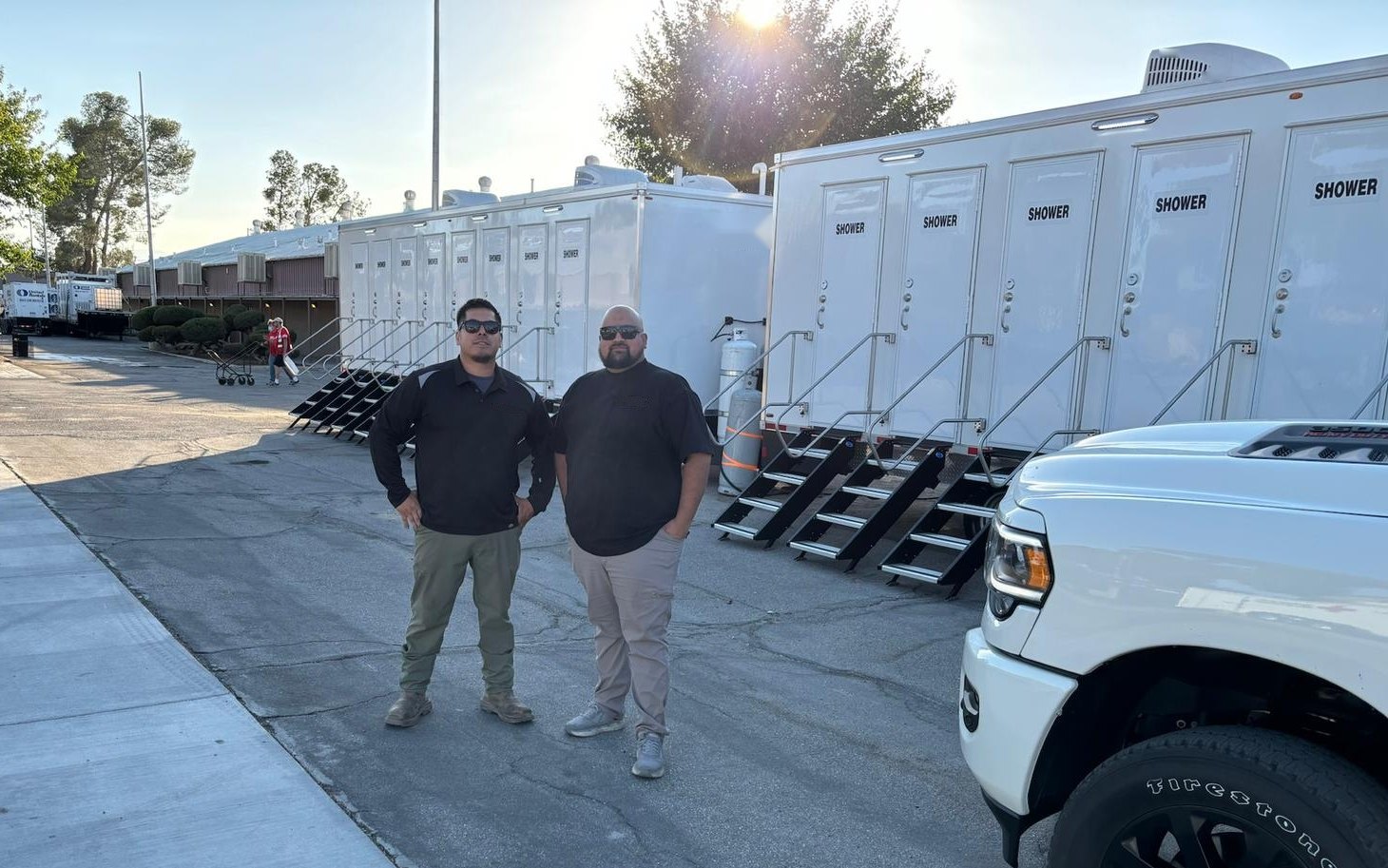
The trailers, the service trucks and the people who drive them are based in the Salt Lake area. That is where a unit is washed, tested, winterized, loaded and checked before it goes out, and it is where it comes back to afterwards. Nothing gets dispatched from a partner yard in another state and nothing gets handed to a subcontractor at the county line.
Being in the valley is a practical decision rather than a sentimental one. Most of this state's people, job sites, venues, campuses and event grounds sit along the Wasatch Front, so a yard here means a driver can be on a site in Draper or West Jordan without a long empty run first, and a unit coming off a job in Sandy can be turned around and sent up to Heber City the next morning. From here the trucks run north through Ogden and Brigham City, east over the summit to Park City, Coalville and the Basin, and south on the interstate through Lehi, Provo and Orem toward the red rock and the warm country in the southwest corner.
The yard is also where the honest constraint lives. A unit is either here, on a job, or in the shop, and dispatch knows which. When somebody calls about a date, the answer comes from what is actually on the ground rather than from a general sense of availability. That is why the answer is sometimes no, and why a yes means something.
What happens between one rental and the next
A returning unit is not parked and forgotten. It gets emptied and flushed, the interior is stripped back and cleaned properly rather than wiped down, and every room is inspected: door locks, hooks, the state of the floor and the seals, mirrors, lighting, the vanity surfaces. Anything that is merely tired gets dealt with while the trailer is standing still, because the alternative is dealing with it on somebody's site in the middle of their event.
The mechanical side gets run rather than looked at. The water heater is fired and the temperature confirmed at the shower head, not at a gauge. Every drain is run. Pumps and valves are run. Heat and cooling are both brought up and held long enough to prove they hold. On a unit going out in winter the freeze protection circuits get tested rather than assumed, which is a slow job and the single most valuable half hour in the whole process.
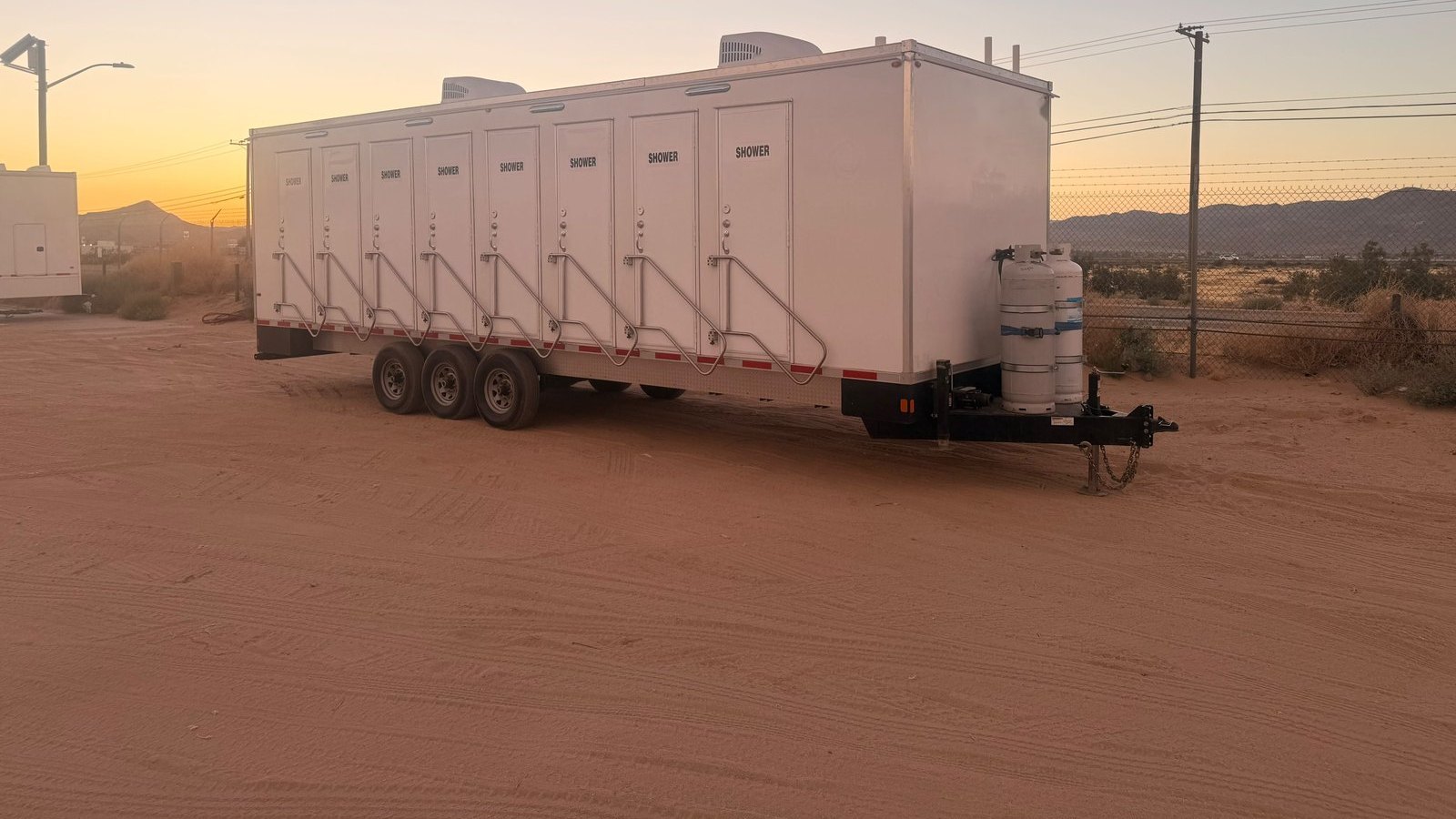
Exterior work matters more on this equipment than it sounds like it should. A unit coming back from a dusty placement in the west desert or off a lease road in the Basin has fine grit in its door seals, roof vents and fan openings. That gets cleaned out at turnaround rather than carried into the next job, because it is the mechanism by which a unit quietly gets worse over a season.
Then the unit is staged for whatever it is going to next. A trailer heading to a July placement in the southwest corner and one heading to a February bench site above Park City leave the yard configured differently, and that configuration happens here rather than in a parking lot at six in the morning.
One booking desk carries the whole state
Utah is handled by one desk rather than by whoever is free. That is deliberate and it is the single most useful thing about how this operation is arranged. The person who quotes a job is the person who knows what the road into Peoa does in March, why a placement out near Dugway needs its own water plan from the first conversation, and what a February delivery above Park City involves that a July one in Saint George does not.
It also means the second call is not a restart. When dates move, and in this state they move around weather more than anything else, or when a crew grows, or when a site changes from a lot in West Jordan to a staging area outside Moab, the conversation continues from where it stopped. Repeating the site details to a new person every time is a tax on the customer that a small operation has no excuse for.
Dispatch holds the schedule, the equipment state and the service calendar in one place. That is what lets somebody answer whether a date is genuinely available rather than probably available, and what lets a service visit be moved when a storm closes a canyon rather than being missed and discovered later.
There is no phone menu and no ticket number. Somebody picks up, and if they are out on a job when you call, they call back with the details you left rather than with a request to repeat them.
What customers say about the yard and the drivers
The driver who dropped it at our Lehi site was the same guy who came back to service it. He knew the unit, and by the second visit he knew our gate code too.
They called the day before with a time window and the driver's name. With three other vendors arriving at the barn that morning, that saved me a lot of back and forth.
A door latch started sticking on day ten. I called in the morning and it was fixed before the afternoon shift came off. No runaround, just fixed.
The person who brings it knows what it is
The driver who delivers a unit is not a hauling contractor who happens to have a trailer on the back. They know the equipment, they set it up, and they are the person who will be back to service it. That continuity is why the walkthrough at delivery is useful rather than a formality, and it is why a driver will look at a pad and say the unit wants to go ten feet to the left rather than putting it exactly where the paint marks were.
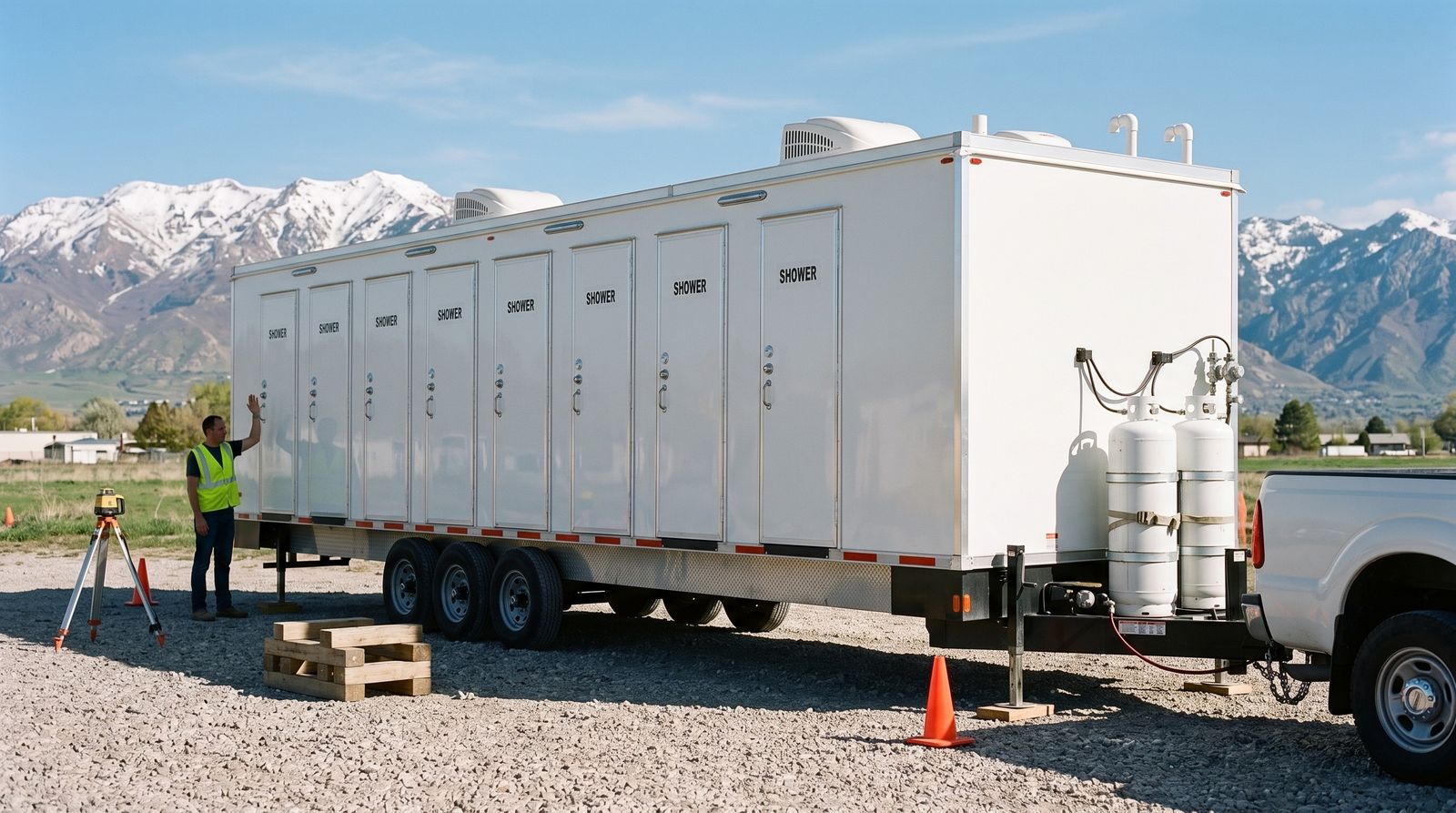
Delivery is a sequence rather than a drop. The approach gets assessed before the truck commits to it. Before the hitch comes off, the driver checks that the pump truck can back up to the service side, because a unit that is easy to use and impossible to pump out is a problem that shows up on day four. Then it is leveled and blocked properly, which is not cosmetic: interior drains rely on it and a unit that is out of level pools water in the rooms.
Then everything gets run. Every room is brought to temperature with the water actually flowing. The heater is cycled. Heat or cooling is confirmed holding rather than just switching on. Connections are tested where hookups exist, and where they do not, tank levels and the service schedule are confirmed out loud with whoever is responsible on site. Power draw is checked against the circuit or the generator so that nothing trips when the rest of the site comes on in the morning.
The last thing is handing it over to a named person. Not the gate, not a sign on the door. Somebody on site who knows how the thermostat works, what the service schedule is, and what number to ring. That five minutes prevents most of the calls that would otherwise happen at nine at night.
The service list that does not get skipped
- Level and blocked, with the door swing, the step or ramp, and the service side all clear.
- Every room run to temperature with water flowing, and the heater cycled under load rather than idle.
- Heat or cooling confirmed holding at the thermostat setting, and the controls explained to a person rather than left on a card.
- Fresh water and drain connections tested where hookups exist. Tank levels, capacity and the agreed service cadence confirmed where they do not.
- Power draw checked against the actual circuit or generator, so nothing trips when the rest of the site comes on.
- On winter placements, freeze protection energized and verified, skirting fitted where it is going to be needed, and the snow clearing plan confirmed with a name attached to it.
- On accessible placements, the approach route walked from the parking or gathering area to the door rather than inspected from the trailer.
- A walkthrough with the responsible person on site, and the dispatch number left somewhere people will actually find it.
If any of those cannot be completed on the day, the customer hears about it from the driver before the truck leaves, not from a service technician a week later.
The schedule is a plan, not a subscription
Every placement longer than a few days gets a service plan, and the plan is built from the job rather than from a default. Waste removal, fresh water where there is no supply on site, interior cleaning, supplies, and a look at the mechanical side while somebody is already there.
The first cycle is a measurement. If the waste tank arrives fuller than the estimate suggested, the interval gets shorter before it becomes a problem. If it arrives half empty, the interval stretches and the customer stops paying for visits that are not doing anything. Getting that wrong in either direction is easy at the planning stage and obvious after one cycle, which is why we look.
On permitted public events the floor is set externally: wastewater comes out of units at least once every twenty four hours under the state rule, and the local health officer can require it more often for heat, attendance or anything else they judge relevant. Private job sites sit outside that rule and are planned on usage, which can land either side of the event standard.
Distance sets the rest. A placement twenty minutes from the yard can be serviced on short notice and the schedule can flex around a phone call. A placement four hours out on a lease road cannot, so it is planned with more tank capacity in reserve, a tighter schedule, and slack for roads that do not cooperate. On remote sites a permitted hauler can pump and fill in the field, so nothing needs to come home for routine work.
Half the year is a cold weather operation
Plenty of companies in this trade treat winter as a slow season. Here it is a busy one, because the customers are busy. Resorts staff up. Highway and utility crews push to finish before the ground goes hard. Energy work in the Basin does not stop for snow. And the emergency calls arrive precisely during cold snaps, when a boiler or a main gives out and a building full of people suddenly has no hot water.
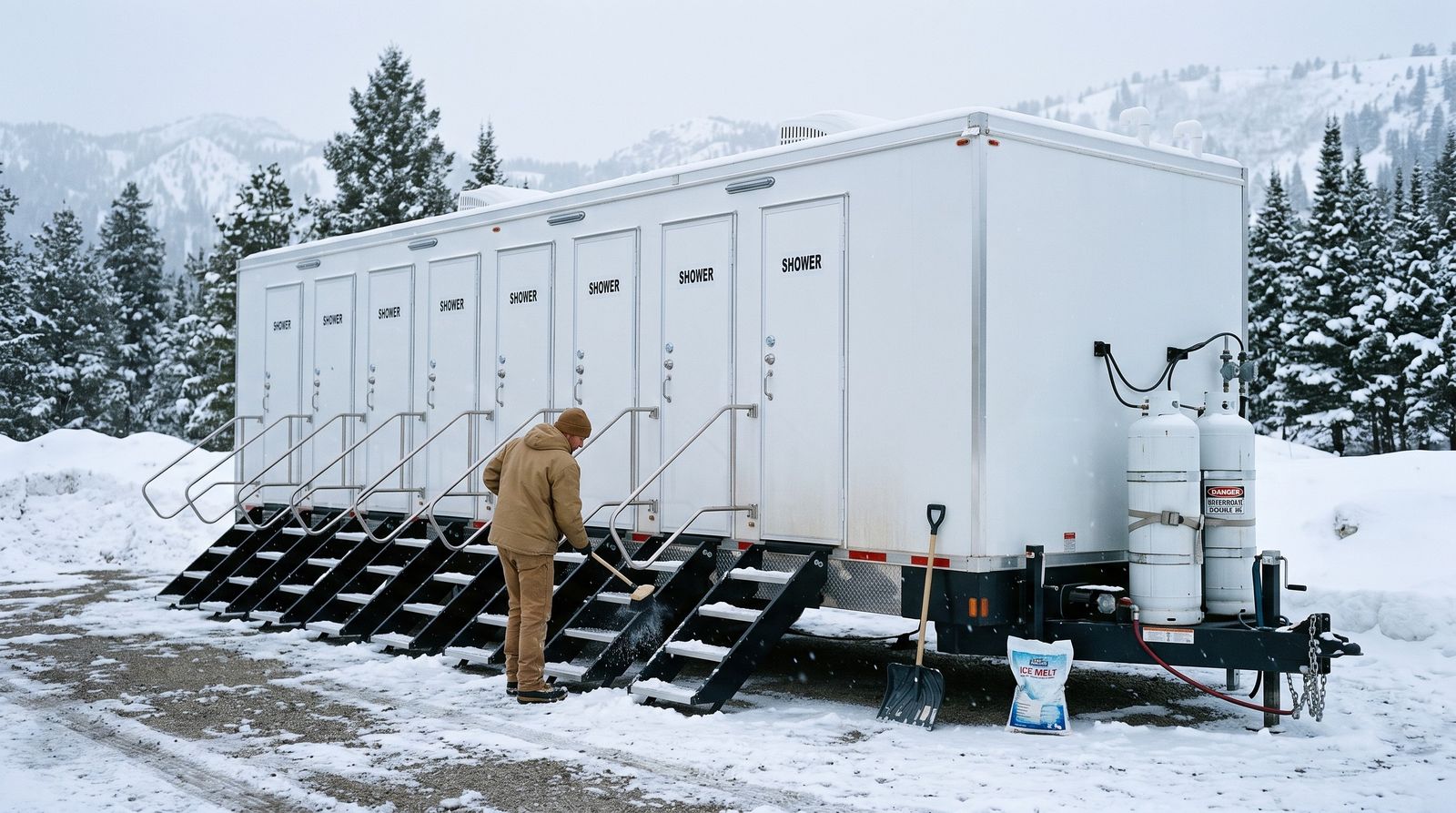
So from late autumn through the thaw, cold is the default configuration rather than an option. Plumbing runs through heated space where the layout allows it, exposed runs carry heat trace, the underside is enclosed, tanks are insulated and heated, and the cabin is held warm between users so every line inside it stays protected. Skirting goes on at delivery on any placement above the valley floor rather than after the first hard night proves it was needed.
Elevation gets accounted for separately. Above roughly six thousand feet the water heater is chosen with the altitude loss already built in, because a heater that performed comfortably at valley elevation in July is a different piece of equipment at seven thousand feet in February. Freeze protection and heater capacity are the same problem at altitude in winter and have to be solved together.
Winter also changes how the service truck runs. Visits happen earlier in the day so that nothing is left holding water into a cold night. Access gets confirmed as cleared before a truck leaves the yard rather than after it arrives at a drifted gate. And the schedule carries deliberate slack, because a canyon closure does not care about a service window and pretending otherwise just moves the disappointment later.
Following one placement through
It starts with a conversation about the site rather than about equipment. Where it goes, how the truck gets in, when it is needed, how many people use it and in what shape across the day, what power exists, what water and waste exist, and anything unusual. That is enough to size the job and to say honestly whether the dates are available.
Then a plan gets written rather than a price quoted into the air. Which unit, where it sits, how it gets power, where the water comes from, where the waste goes, how often somebody comes back, and what the site needs to have ready. On a winter or high altitude placement that plan includes the freeze protection and the snow clearing plan. On a public event it includes the accessible unit and the route to it.
Delivery is scheduled around the customer's window rather than ours, with a day, a rough arrival time and the driver's name sent ahead. For a Saturday wedding at a Heber Valley barn that usually means a Friday afternoon drop, so the unit is warm and tested before the first guest parks. Setup runs as described above: positioned, leveled, run, tested, handed over to a named person.
Then the placement settles into its service rhythm, and the first cycle corrects the plan. From there the job is quiet, which is the point. Most of the value in this trade is measured in things that did not happen: no frozen line in January, no unit out of service the week of the event, no crew driving forty minutes to a truck stop because the showers were cold.
At the end, pickup is scheduled, the unit is pumped and pulled, and the pad is left the way it was found. Anything the customer put in or around the unit comes back to them rather than into our truck. If the dates moved, and they frequently do, extending is straightforward with a little notice and finishing early just needs a pickup slot.
Back at the yard the cycle starts again, which is why the turnaround section above is not housekeeping. The next customer's experience is decided by what happens to the trailer in the week nobody is renting it.
The standard each shower room is held to
Clean in this trade has a specific and plain definition, and it is worth stating because the word gets used loosely. It means that a person walking into the room at the end of a long day does not hesitate in the doorway. That is the whole test, and it is harder to pass than a visual inspection from outside.
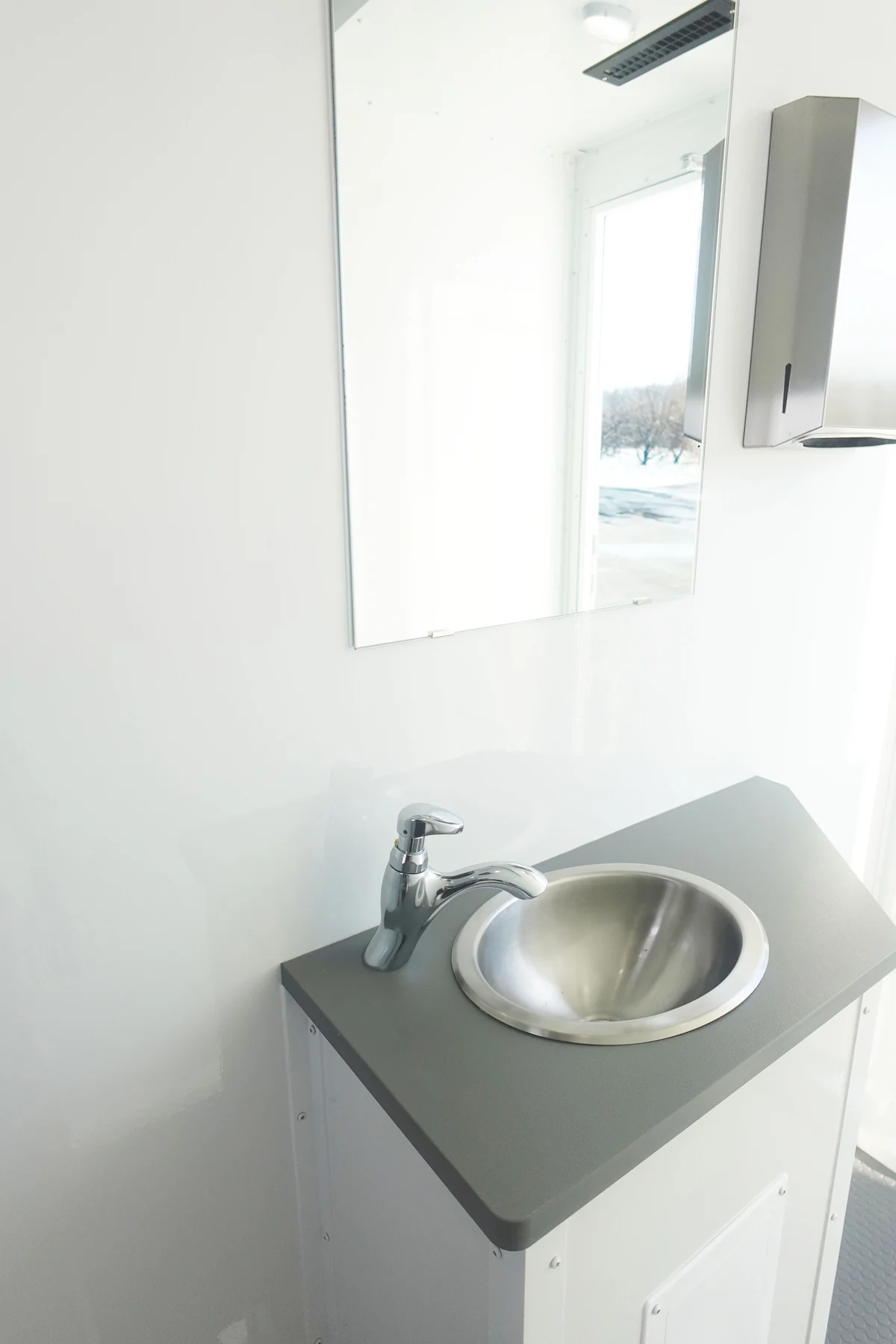
In practice: floors and drains actually cleaned rather than rinsed, seals and corners done, mirrors and surfaces finished properly, no smell, supplies stocked before they run out rather than after somebody complains, and lighting that works in every room. Small failures compound fast. One burned out light and one slow drain make a room feel neglected regardless of how clean it technically is.
This matters commercially and not just as a point of pride. A crew that will not use the facility drives somewhere else, and then the rental was money spent on a box on a pad. Usage is the only real measure of whether a shower trailer was worth renting, and usage is decided almost entirely by how the interior feels in the first three seconds.
It is also why servicing frequency gets planned honestly rather than sold thin. A unit serviced less often than its usage requires stops being usable well before it stops being technically functional, and under the state's event rule a unit that is not being kept in sanitary condition cannot be counted toward the minimum required facilities at a permitted gathering anyway. The cheap schedule is not cheap.
The things we say no to, and why
There are jobs we turn down, and saying so is more useful than pretending otherwise. A site where a loaded trailer genuinely cannot reach the pad is the most common one. Sometimes there is a workable spot fifty yards away and the whole problem disappears once somebody walks it. Sometimes there is not, and the honest answer is that this is not the right equipment for that location.
A date that is already committed is a no rather than a maybe. Holding a customer on a soft yes while hoping something frees up is a way of ruining two jobs instead of one. If the week is full, that gets said on the first call.
Placements where the customer cannot commit to the site conditions the unit needs are the third category. If nobody will own plowing the access on a winter bench placement, or if there is no plan for power on a site with no shore power and no appetite for a generator, then the unit will fail and everybody will be unhappy about it. It is better to work that out in the conversation than on day nine.
We also do not quote around a customer's own constraints by quietly removing something. If a service cadence needs to be what it needs to be, that is what gets quoted. A thinner schedule that looks better on paper and produces an unusable unit in week three is not a saving.
What a site or a venue is likely to ask for
Most general contractors, campuses and venues want documentation on file before equipment comes through the gate. Ask for what your site needs at the point of booking rather than the week of delivery and it is a non event. Asked for on the Thursday before, it becomes the reason a delivery slips.
For public events the paperwork that actually matters is usually not ours. It is the county health department permit under the state mass gathering rule, which is administered locally rather than by one statewide office, and which generally wants the application at least thirty calendar days ahead to avoid a late fee. We will tell you which county a site falls under and what that county's process has looked like. We will not claim to have handled a permit unless that is genuinely the arrangement.
On federal installation land there are site access and security procedures that belong to the installation and not to us. Those need confirming per job, early, because they can add lead time that nothing else on the schedule anticipates.
For private job sites the sanitation obligation runs through the federal construction standard rather than through a county gathering permit, and the underlying project's own building and land use permits apply separately. Keeping those three things distinct saves a surprising amount of confusion.
Insurance certificates and vendor paperwork for a shower trailer rental
Two pieces of paper hold up more deliveries than any road: a certificate of insurance and a vendor record. Neither is hard to produce. Both take longer than people expect when they are first asked for the day before the truck is due.
The certificate is issued by our insurance agent rather than typed up at the desk, so it usually takes a business day or two to come back. What speeds it up is having the exact details at booking:
- The certificate holder's full legal name and mailing address, spelled the way their contract spells it.
- Whether they want to be named as an additional insured, which is common on commercial construction and on school property.
- Any coverage minimums written into the site contract or venue agreement. Send us the clause itself rather than a summary of it.
- Where the finished certificate should go: your office, the general contractor's project manager or the venue coordinator.
Then the vendor record. Larger companies and most public entities want a W-9 and their own vendor form before a purchase order can be cut, and some will not schedule a delivery until the PO exists. If your accounts payable team works that way, say so on the first call and the W-9 goes out the same day. Put the PO number on the request and it will appear on everything that follows.
State agencies, the University of Utah and several Wasatch Front school districts register vendors through their own procurement portals. That registration is ours to do once you tell us which portal it is. It can take a week on their end, so a campus job booked late needs this conversation before anything else.
On site the paperwork gets simpler. The driver carries the delivery ticket, and the named contact on your side signs at setup. If the site safety plan calls for an orientation or a job hazard briefing before anyone works on the property, tell us the time and the driver will be there for it.
The part that decides whether you call us again
Equipment fails. Roads close. A storm lands on the morning of a delivery. What separates one rental company from another is entirely what happens in the following hour, and it is worth being explicit about how that is handled here.
If a unit has a problem on site, the same number that booked it is the number that fixes it, and it reaches somebody who knows which unit is on your pad. Slow drainage, a drop in hot water, a thermostat nobody can work out, a service truck that needs a path cleared. Small problems on day one are cheap. The identical problem on day four has usually taken the crew's confidence in the unit with it.
If we are going to be late, or a canyon closure means a delivery is not happening on the promised morning, that is a phone call from us rather than a discovery by you. Nobody has ever been made happier by finding out at ten in the morning what could have been said at seven.
And if something was our mistake, it gets named as our mistake. This is a small enough trade and a small enough state that reputation is the only durable asset, and it is not protected by being vague about what happened.
What twelve months look like from the yard
This trade has a shape to its calendar, and knowing it explains a lot about why availability behaves the way it does.
January and February are resort towns, holiday and festival work in the high country, and the cold weather emergencies. A boiler goes down in a school or a care facility during a hard freeze and that becomes the day. Units are out in the worst conditions of the year, servicing runs early, and the yard is mostly doing winter recovery on whatever came back.
March through May is runoff and mud. Access that was solid in February turns soft, spring events start, and the first construction placements of the season go out onto ground that has not finished drying. This is the season where a placement gets moved fifty yards more often than any other, and where two smaller units frequently beat one larger one because of what the approach will carry.
June through August is the busiest stretch and the most spread out geographically. Camps fill the high valleys, festivals take over main streets, film and production work runs in the canyon country, and the southwest corner turns into a cooling problem rather than a heating one. Service intervals tighten everywhere because usage climbs.
September and October are the push. Highway and utility crews racing the first hard freeze, the autumn race calendar in the red rock, fair and rodeo weeks, and harvest and hunting camps. Anything going out in October leaves the yard with the winter preparation already done rather than scheduled for later, because later frequently arrives first.
November and December are the switch between seasons. Units come back to be winterized properly, the ones staying out get skirting fitted and checked, and the calendar starts filling with resort and holiday placements. It is the slowest month for deliveries and the busiest one in the yard, which is the opposite of how most people imagine it.
What gets bought, kept and retired
The equipment choices behind all of this are plain ones, and they are the reason the rest works. Units are specified for the hardest conditions they will actually meet rather than the average, because the average never breaks anything. In this state that means freeze protection engineered in rather than added on, heaters sized with altitude derating absorbed, and cooling capacity chosen for a southern July rather than a valley June.
Consumables and wear items are carried in stock rather than ordered when they fail. Locks, hooks, light fittings, seals, hoses, fittings. None of that is expensive. All of it is the difference between a same day fix and a unit that stays slightly broken for two weeks because a part is in transit.
A unit gets retired from a particular kind of work before it gets retired entirely. Something that has taken a hard season on a dusty lease road is not the first choice for a wedding venue the following June, and being honest about that internally is easier than saying sorry about it externally.
The same logic applies to the trucks and the service equipment. The pump truck that cannot reach a site is exactly as useful as no service plan at all, so the capability to reach the hard places is part of the specification rather than an aspiration.
Local service is a practical claim, not a slogan
Every operational fact on this site comes from running equipment through these specific conditions rather than from a general manual. Water heaters lose output at altitude, so a February placement at seven thousand feet is planned differently from a July one at forty three hundred. Lake effect snow piles up on the benches while the valley floor gets a dusting, so a snow forecast is not a single number for the region. Spring runoff turns March pads into April bogs. Red rock sand takes longer to stabilize under a trailer than a graded pad does. Dust on a lease road eats door seals over a season.
None of that is available to somebody sending trucks into this state from somewhere else. It is the accumulated result of setting units in these places, servicing them through these winters, and occasionally getting it wrong and adjusting.
It also means the answers on the phone are specific rather than generic. What a canyon route does in March, why a particular site wants its own water plan, whether a crew of your size at your shift pattern actually needs the unit you called about or a smaller one. Those are the questions worth answering before a truck is booked, and they are the ones a local desk can answer without calling somebody back.
If that is the kind of company you want on the other end of the phone, the number is (801) 683-5822. If writing it out suits you better, the Utah shower trailer rental planner takes a few minutes and reaches the same desk.